

.png)

Project Overview
Our partner African Bamboo is an NGO based in the Netherlands with activities in Ethiopia, founded by a family of Ethiopian entrepreneurs who are heavily involved in bamboo value chain integration. This includes the development of high-value bamboo products exported to European markets.
The main goal of the project is to use residual bamboo waste streams that are generated from their plantations by converting the biomass into biochar to then be distributed as organic fertiliser to local farming communities across Ethiopia.
The project is sited in the Sidama region of southern Ethiopia, where smallholder soils register pH levels between 4 and 5. These are highly acidic soils that are increasingly degraded from synthetic fertiliser dependence. Biochar's alkaline properties directly address this problem. In the counterfactual scenario, bamboo thinning residues are left to decompose on-site, generating methane. The project diverts that waste into a sealed retort pyrolysis system operating at 450–550°C, converting it into stable biochar that retains 89.9% of its carbon after 200 years.
BioFlux has been responsible for designing the entire project and ensuring that it can be deployed remotely in farm settings while still being certifiable under the most rigorous biochar certification framework. The project will be certified under Isometric’s distributed biochar methodology.
Our work has also involved technology identification and project design. A custom batch kiln has been built to fit the local needs of the project, and BioFlux played a central role in leading certification. In the future, we will also guide African Bamboo from end to end until production starts and gain commercial traction.
The main challenges we’ve had to manage and overcome include working without a reliable electricity connection and a shortage of skilled labour for 24-7 operations. The lack of local infrastructure also means biomass has to be transported by donkeys, which poses significant logistical challenges. Making the most of local logistics and infrastructure and adapting to circumstances on the ground has meant pivoting to a semi-continuous (batch) pyrolysis plant.
Feedstock Specifics
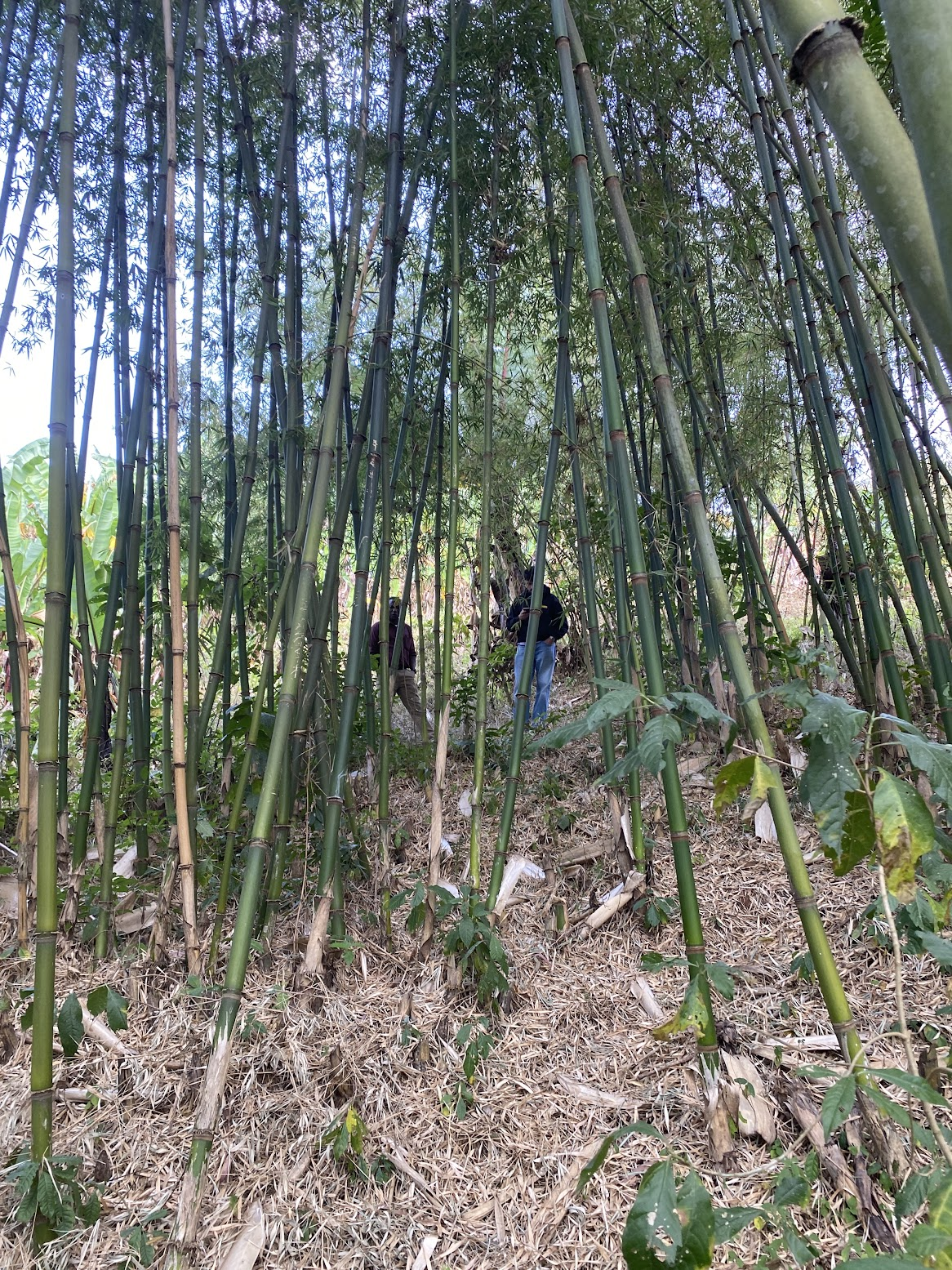
The biomass is a mix of forestry residue and agricultural residue, namely bamboo offcuts from nearby bamboo plantations and forests. Bamboo regenerates very quickly and is a sustainable feedstock, making it ideal for the project. Bamboo is not extracted, but rather harvested using FSC-approved forest management practices (i.e. forest residue collection).
Community Engagement and Impact
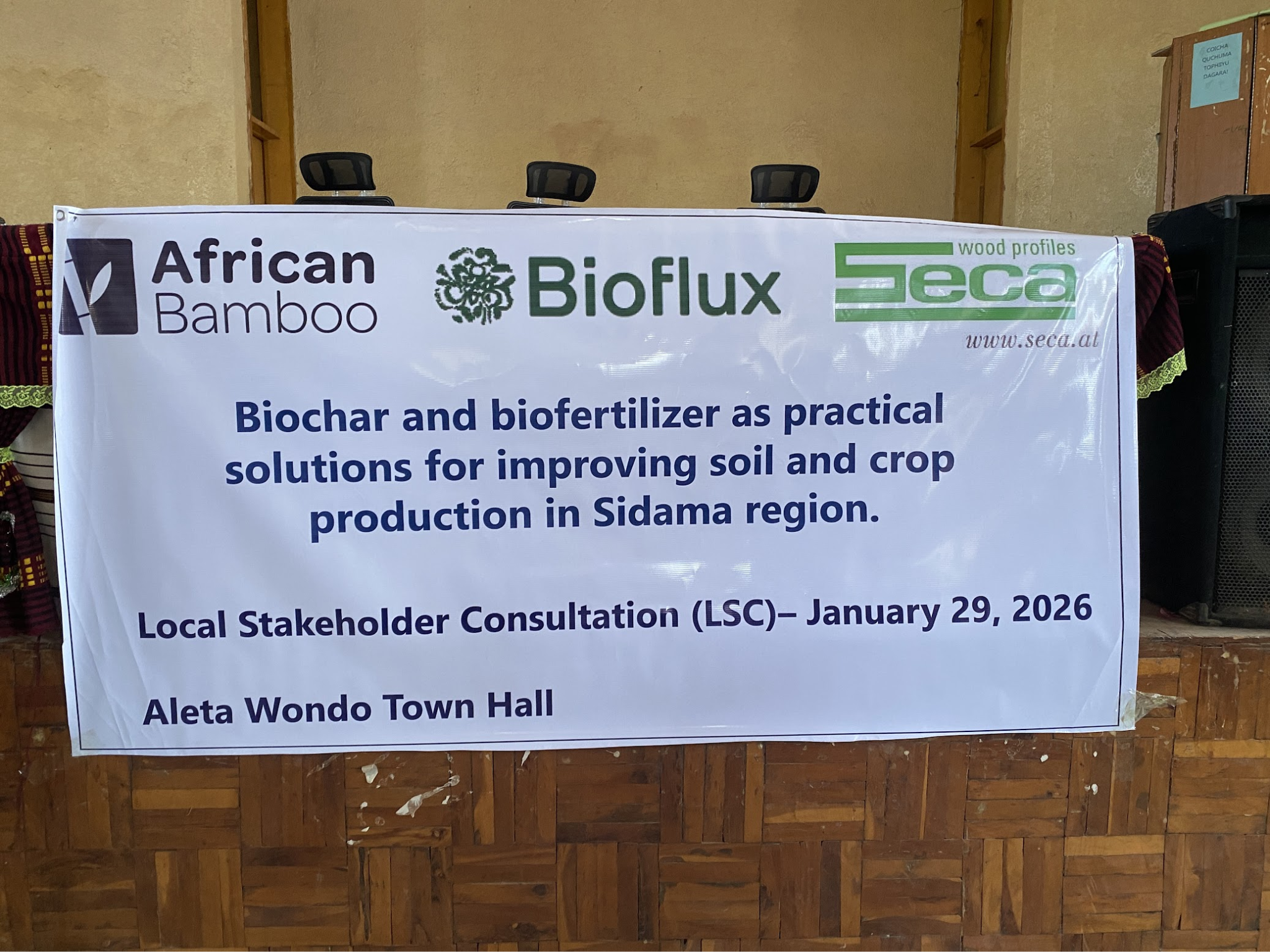
A crucial part of our initial work has been building a biochar value chain that is community-led. This began with formal Free, Prior, and Informed Consent sessions held in January 2026 across 170 hectares of mapped application plots in Hula and Bursa woredas, engaging approximately 700 smallholder farmers. Group agreements have been concluded with four local cooperatives, including Hula Edget Minch, Hula Bochesa, Bursa Addis Edget, and Bursa Abeba.
The project supports 40 micro, small, and medium enterprises comprising 500 youth and women across the value chain. An independent gender audit has been conducted in order to help ensure equal access to opportunities and safe participation across all operations.
Lasting local capacity is a core objective of the project and is being achieved through training farmers and MSME operators in vital skills, including biomass management, equipment operation, soil health, and biofertiliser application. Crop yields are also expected to improve by 11-25%, which will directly strengthen household food security in a region heavily dependent on rain-fed agriculture.
Interested to learn more about what we do? Explore our process.